Lead Designer
Dovly
1 Year

Figma
Visual design, User research, Interaction design, PRD
2 Designers, 1 Project Manager, 1 Creative Director, Developers
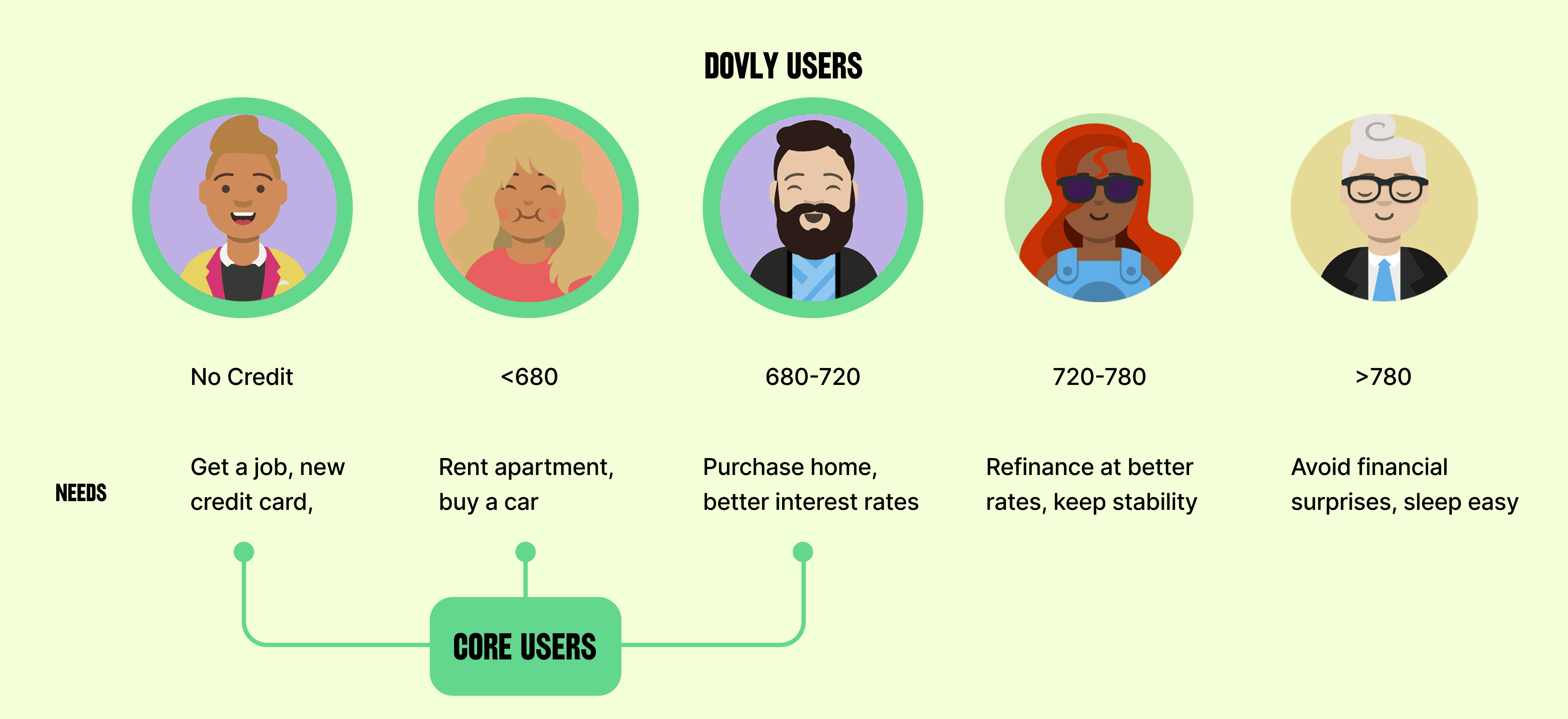

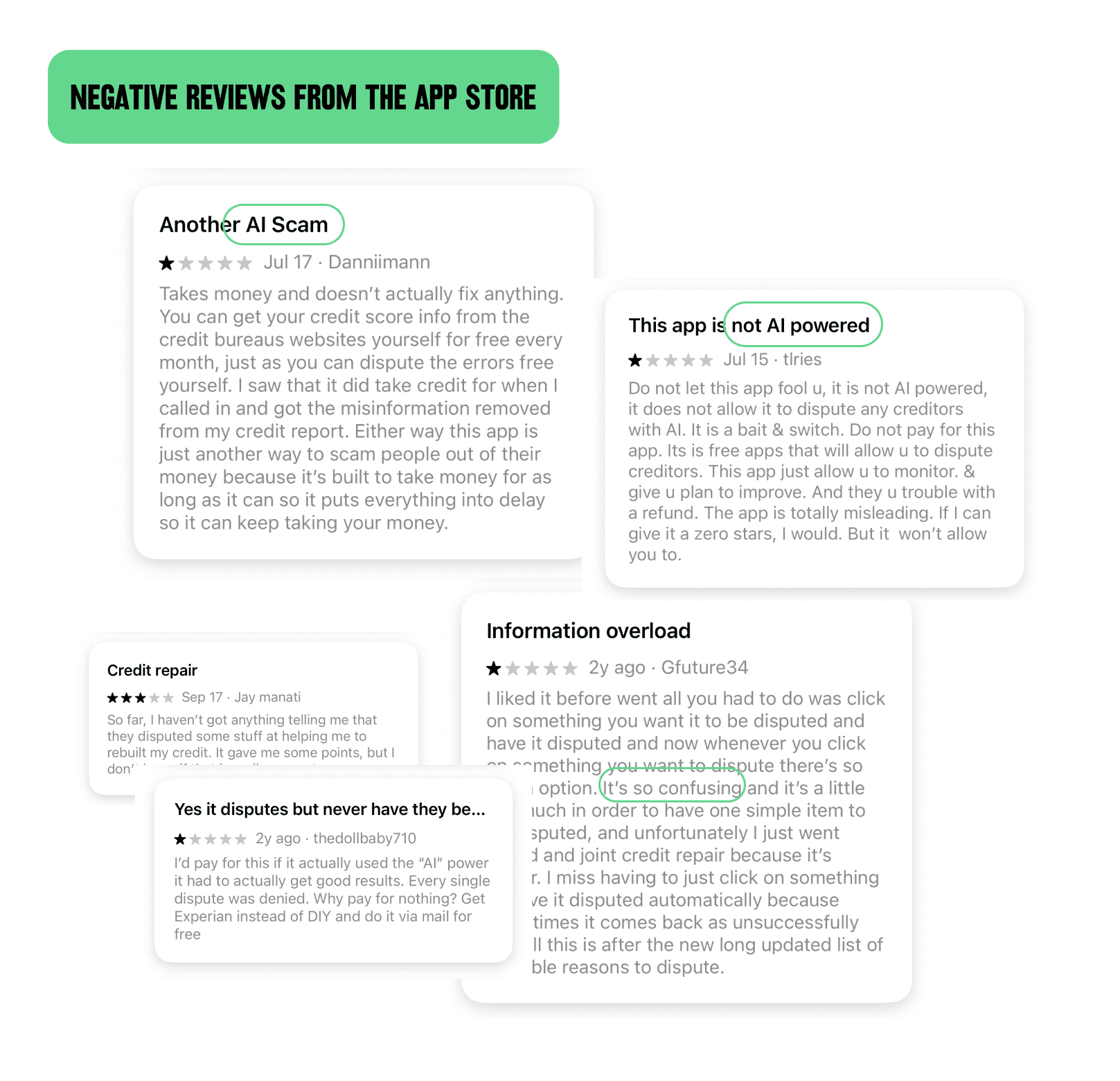
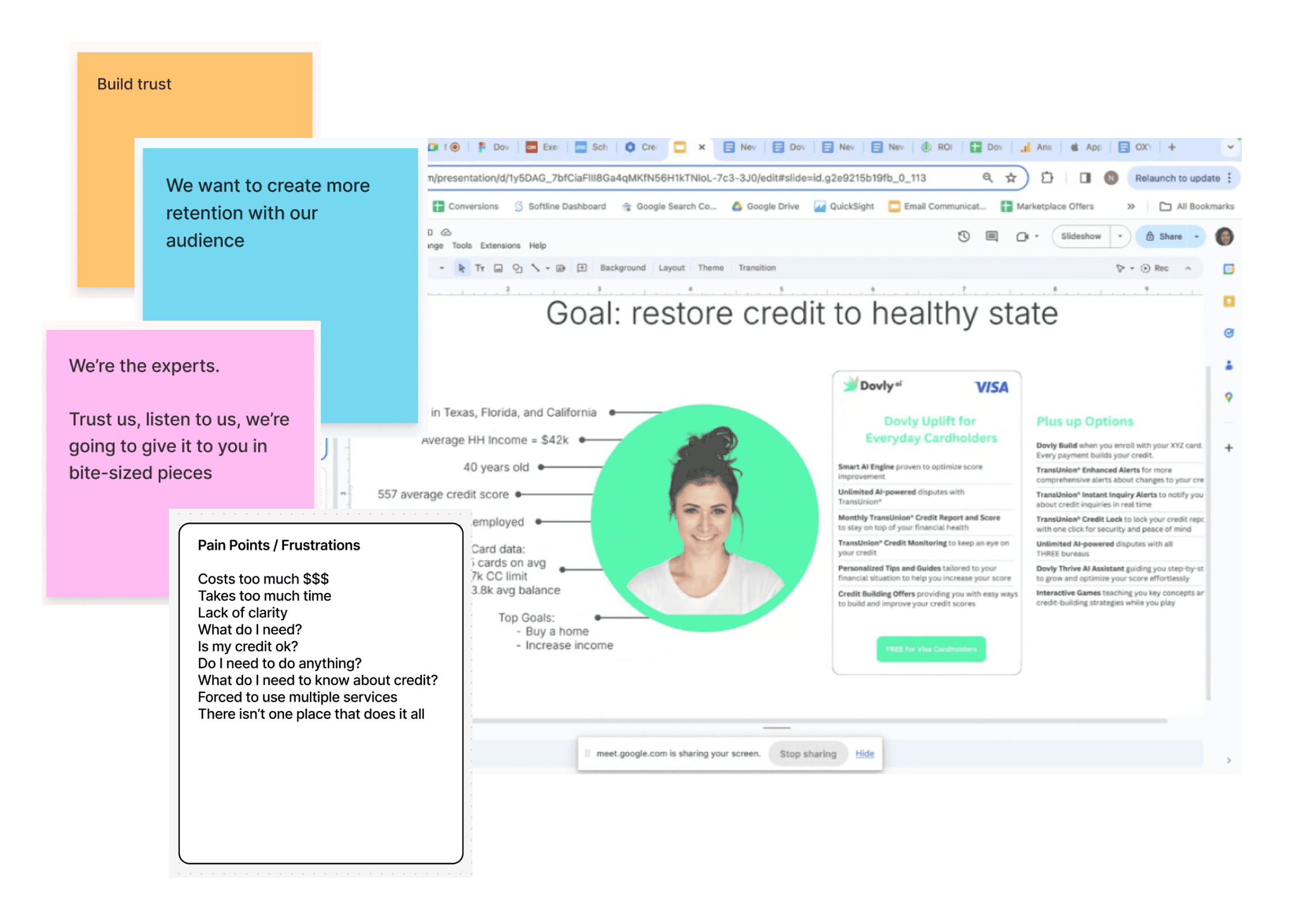
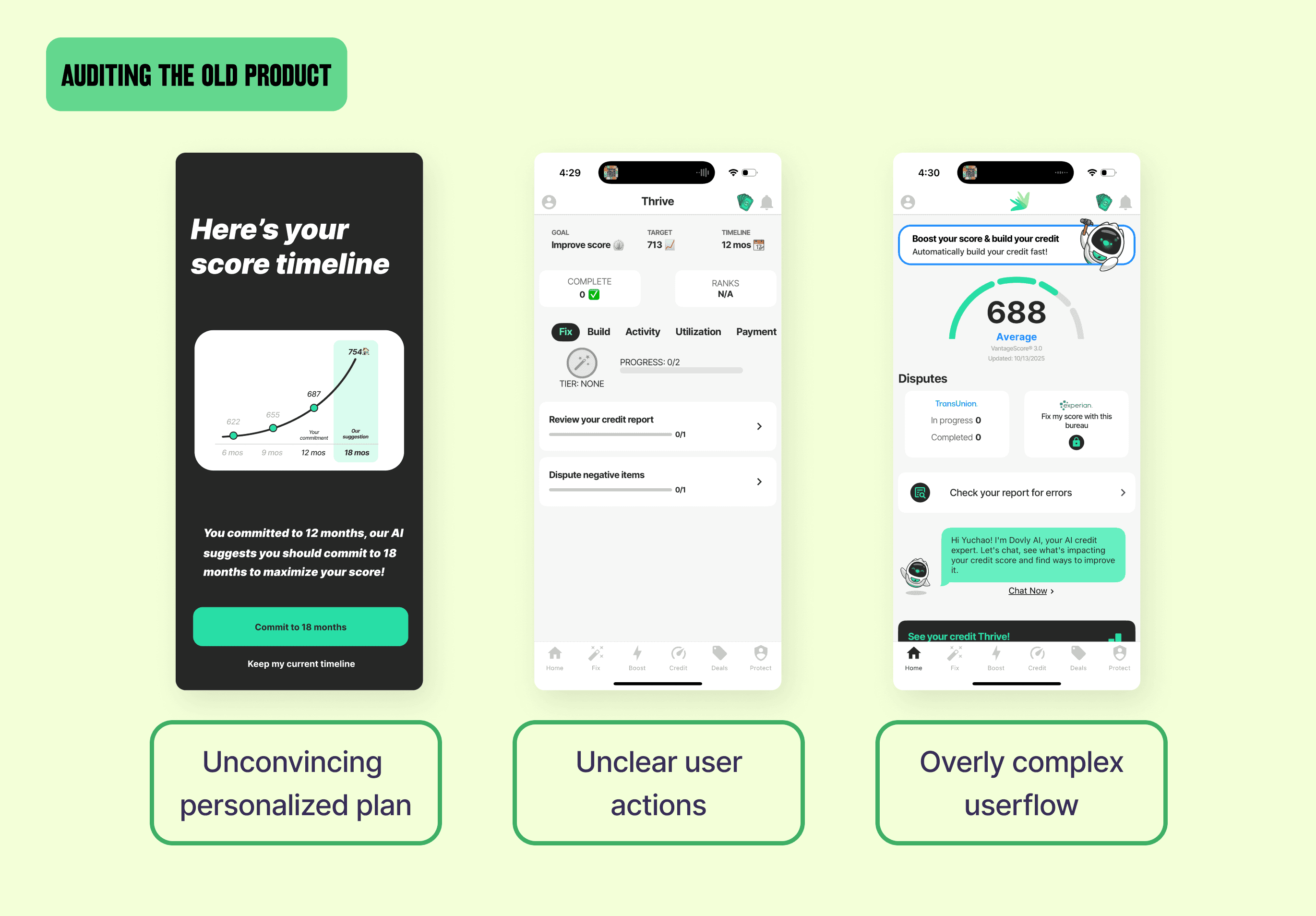
We performed a detailed audit of the current Dovly app through product walkthroughs and design reviews. By mapping each step of the user journey, we identified where users lost clarity or momentum and uncovered opportunities to simplify flows and improve overall usability.
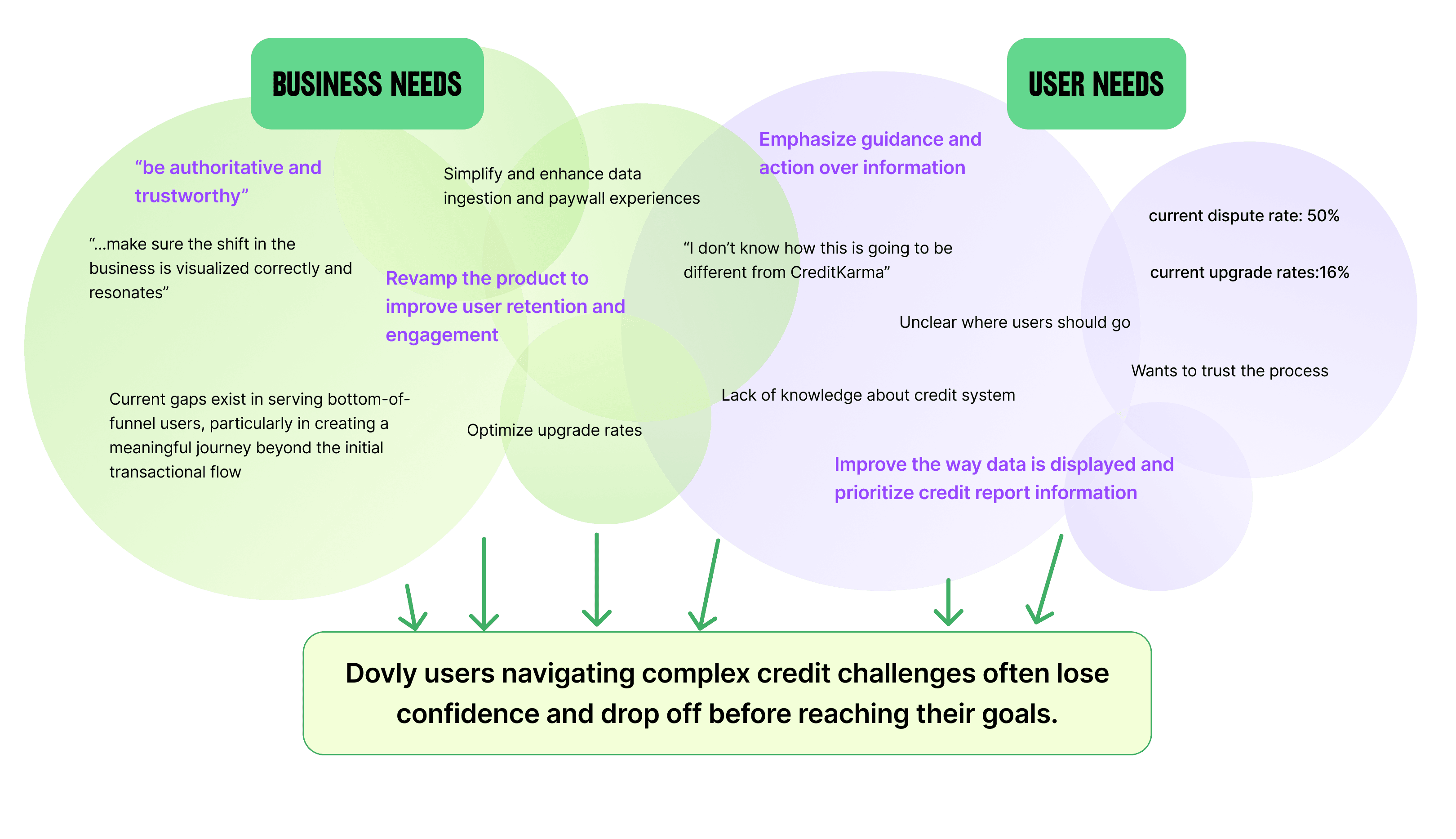
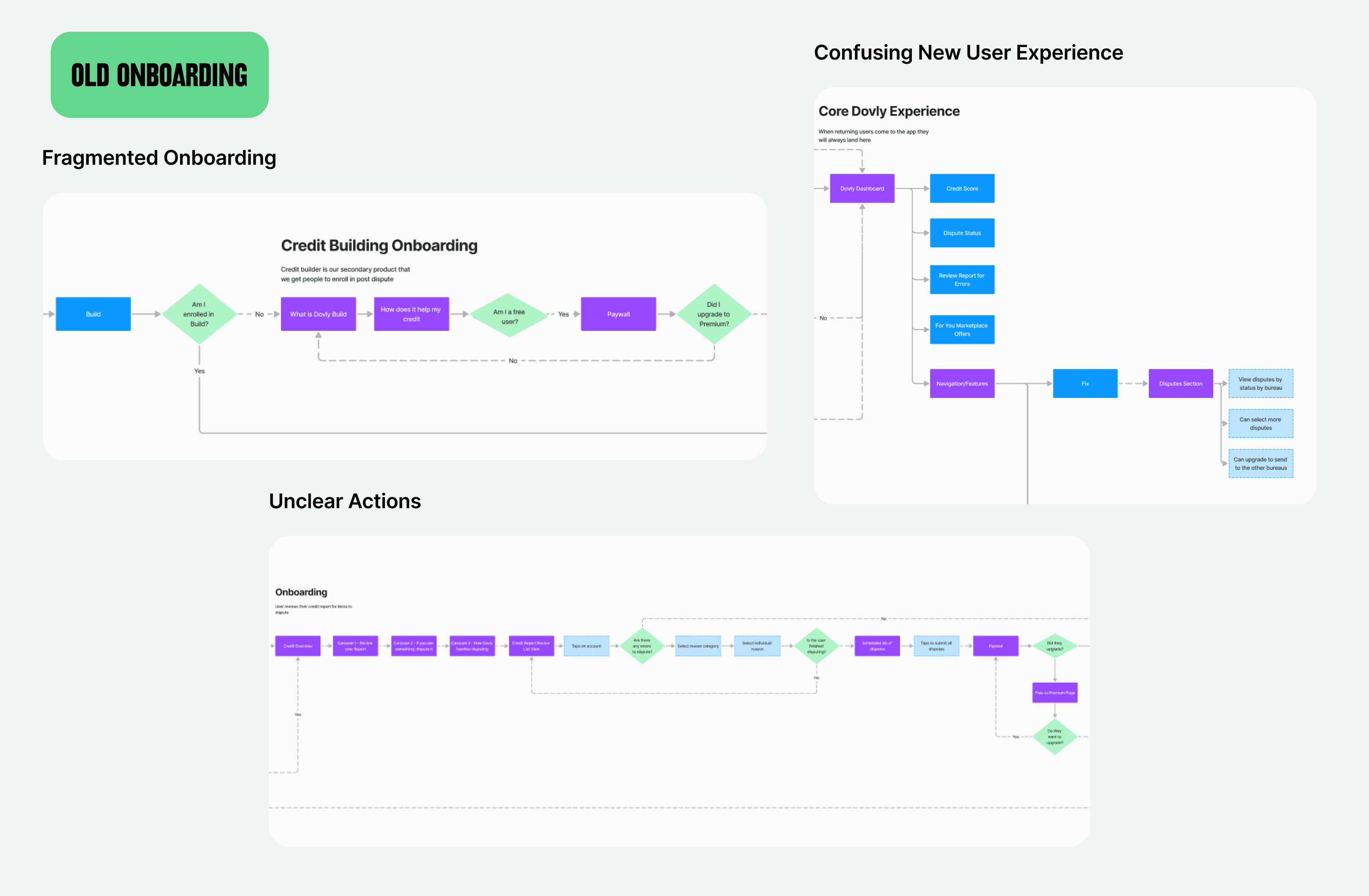
Before sketching any screens, we needed to understand why users were getting lost. By mapping the existing user flows, we uncovered where the experience broke down, too many options, unclear direction, and no sense of progress.
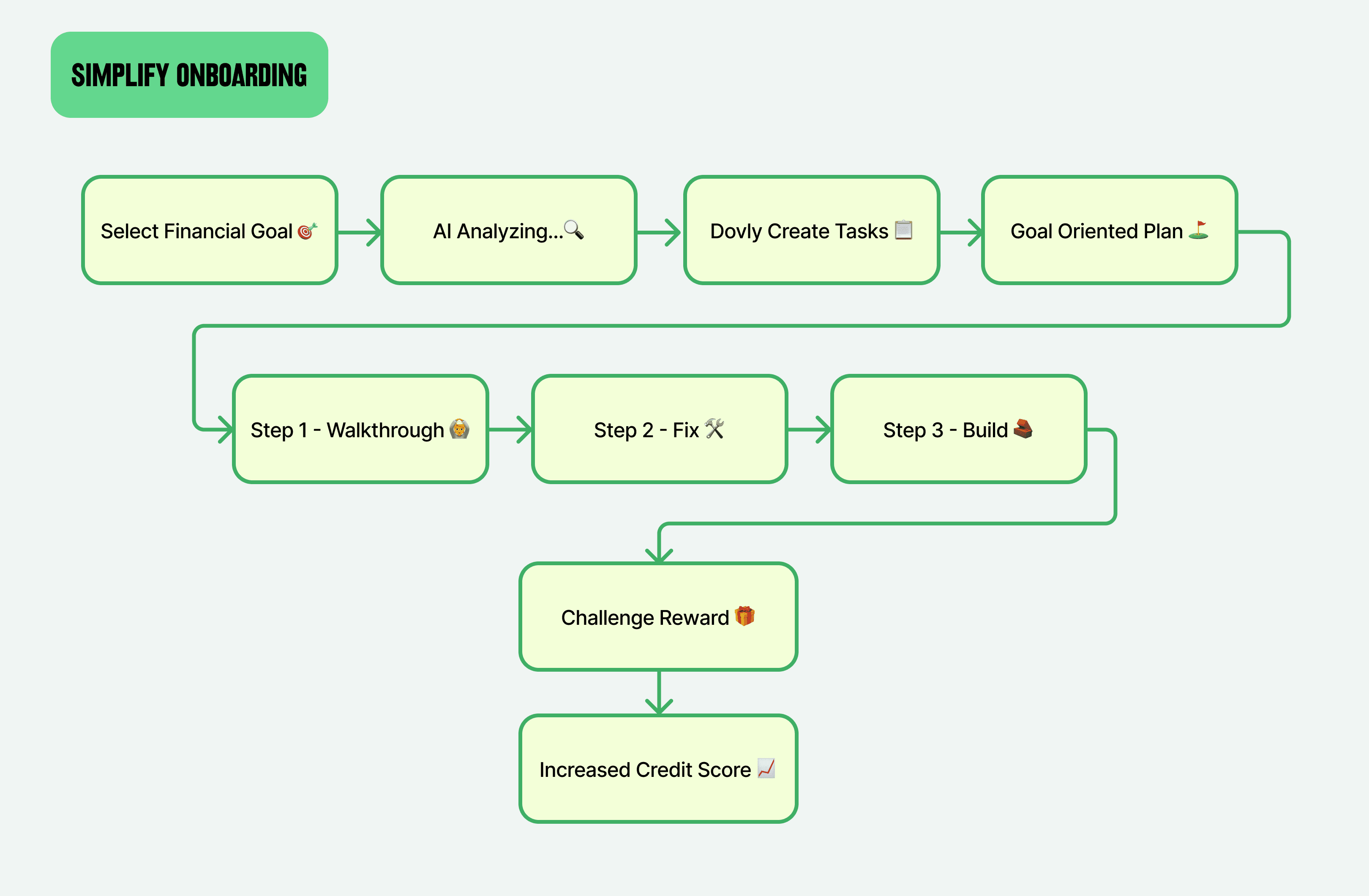
Collaborating closely with stakeholders, we redefined the journey through several rounds of iteration, creating a flow that guided users step-by-step and made the path to success feel clear and achievable.
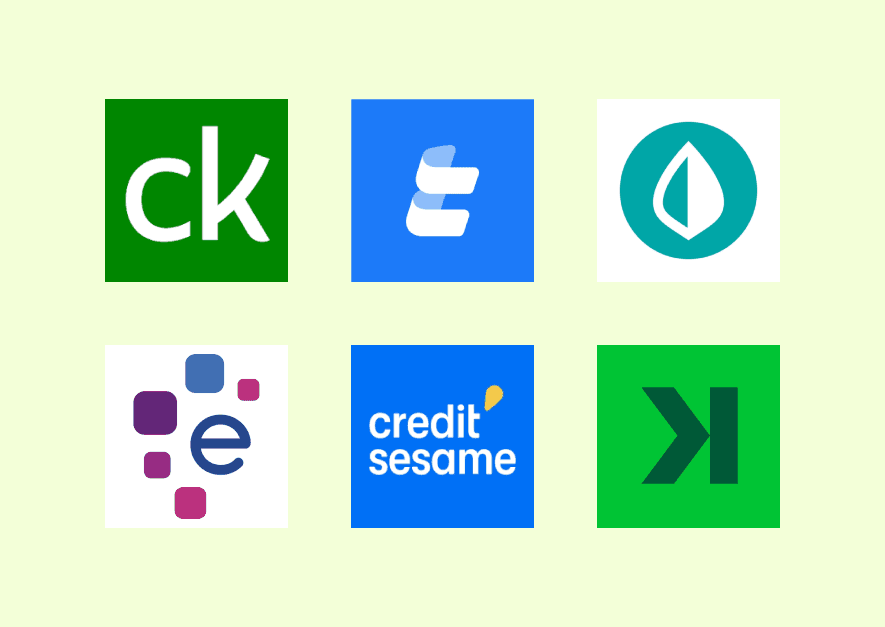
To better redesign Dovly, we conducted a competitive analysis of leading credit repair and monitoring apps. By examining their onboarding flows, communication tone, and progress visualization, we identified industry best practices and gaps in emotional design.
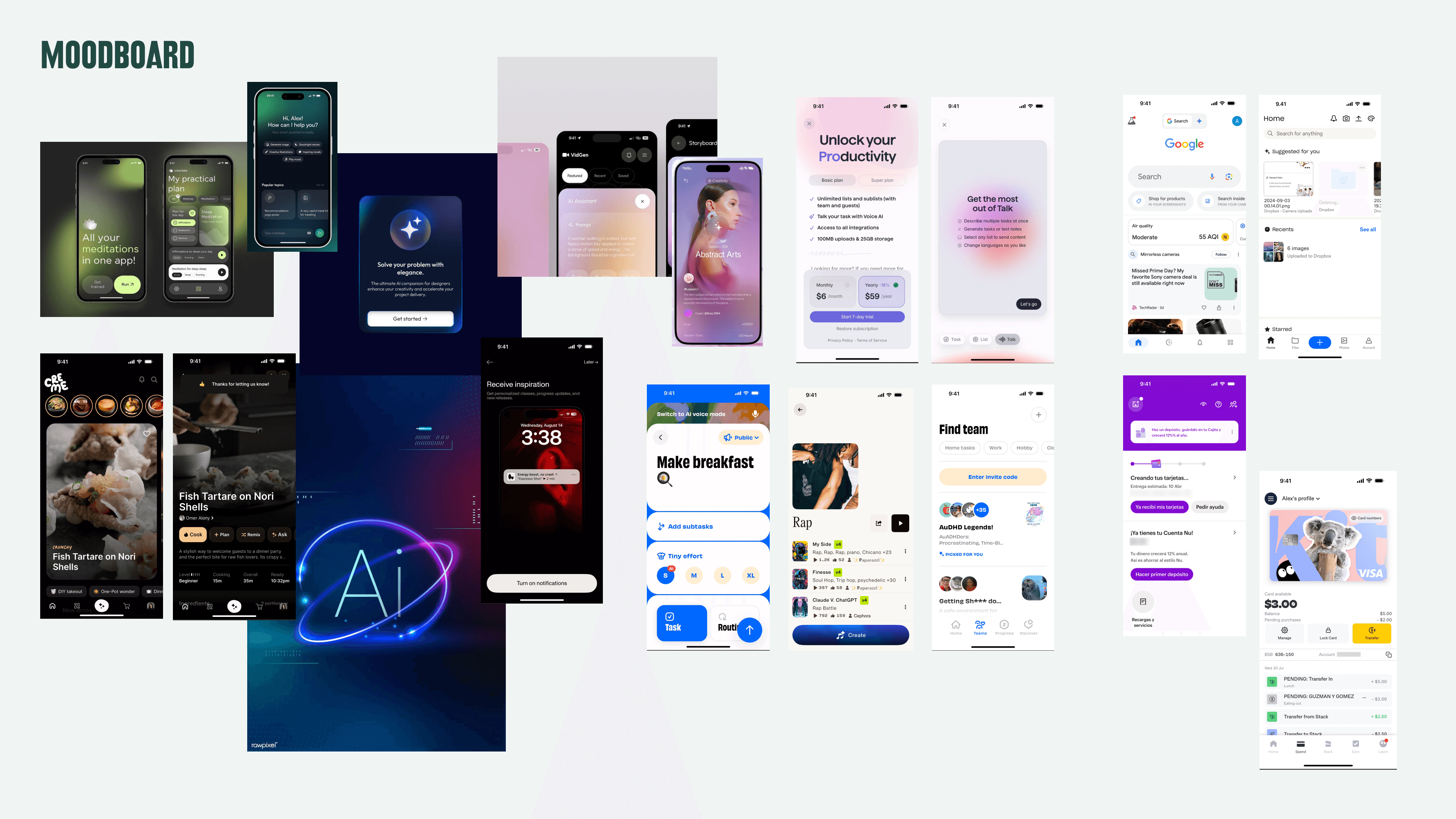
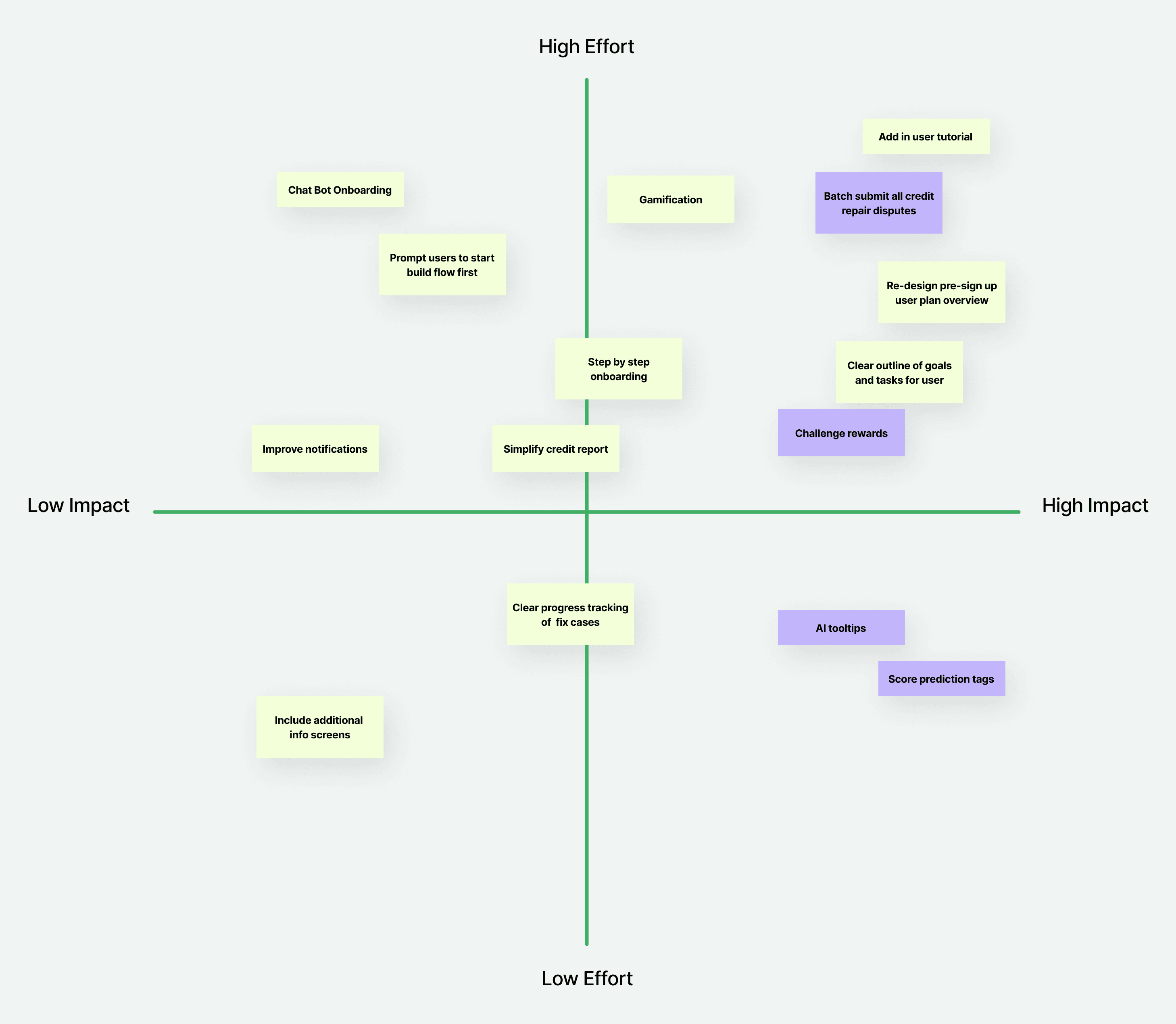
Building on our research, we brainstormed solutions that could make users feel more confident and supported throughout their credit journey. By mapping ideas on an Impact Effort Matrix, we aligned around opportunities that would create the most value.
Wireframing
Exploring Structure Through Wireframes
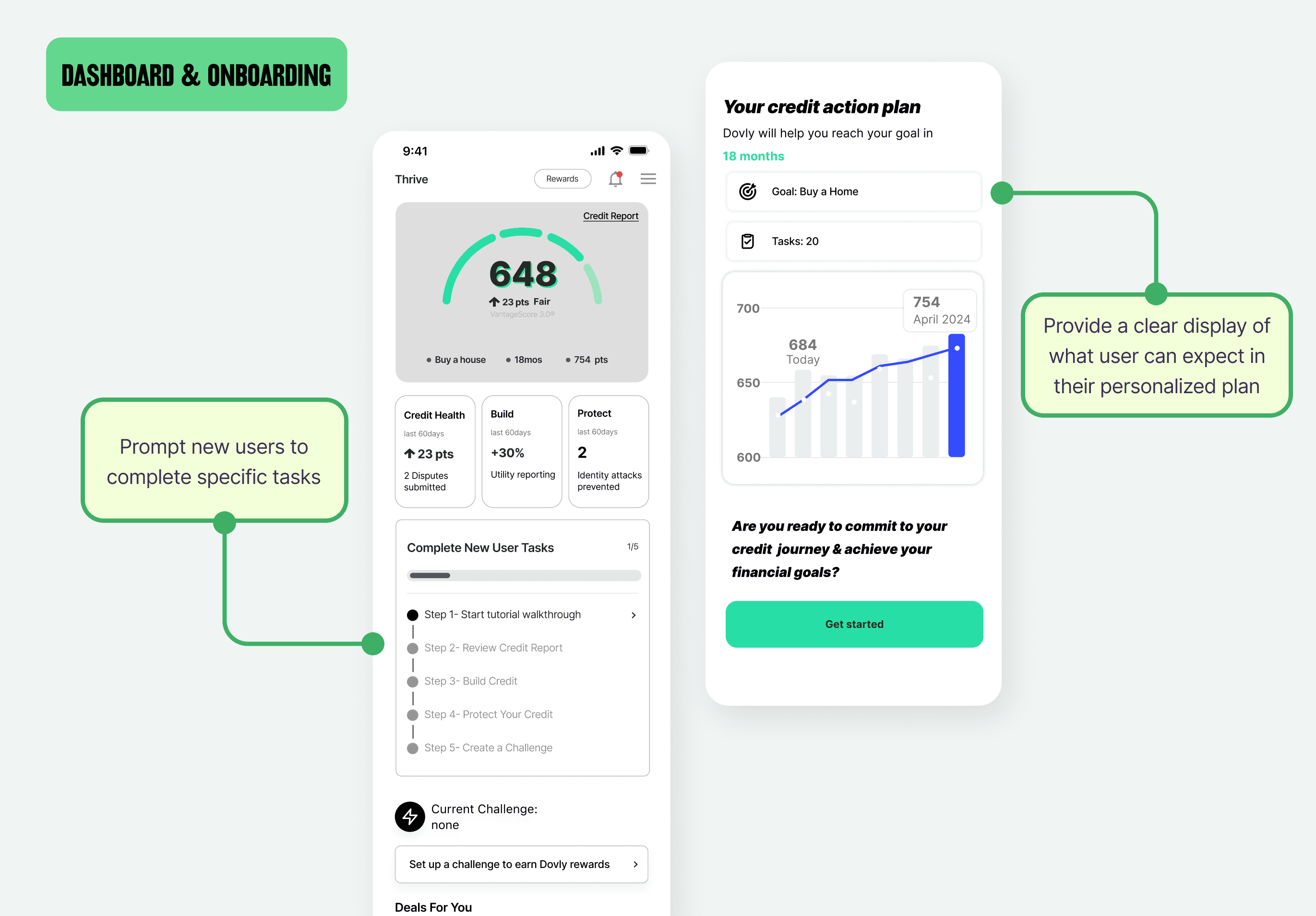
To validate our user flow improvements, we created low-fidelity wireframes that focused on content hierarchy and task progression. Collaborating with stakeholders, we tested different dashboard layouts and onboarding patterns to ensure the experience felt both intuitive and action-oriented.
This phase allowed us to align on the core framework before refining visuals or microinteractions.
Hi-Fidelity
Turning Anxiety into Empowerment
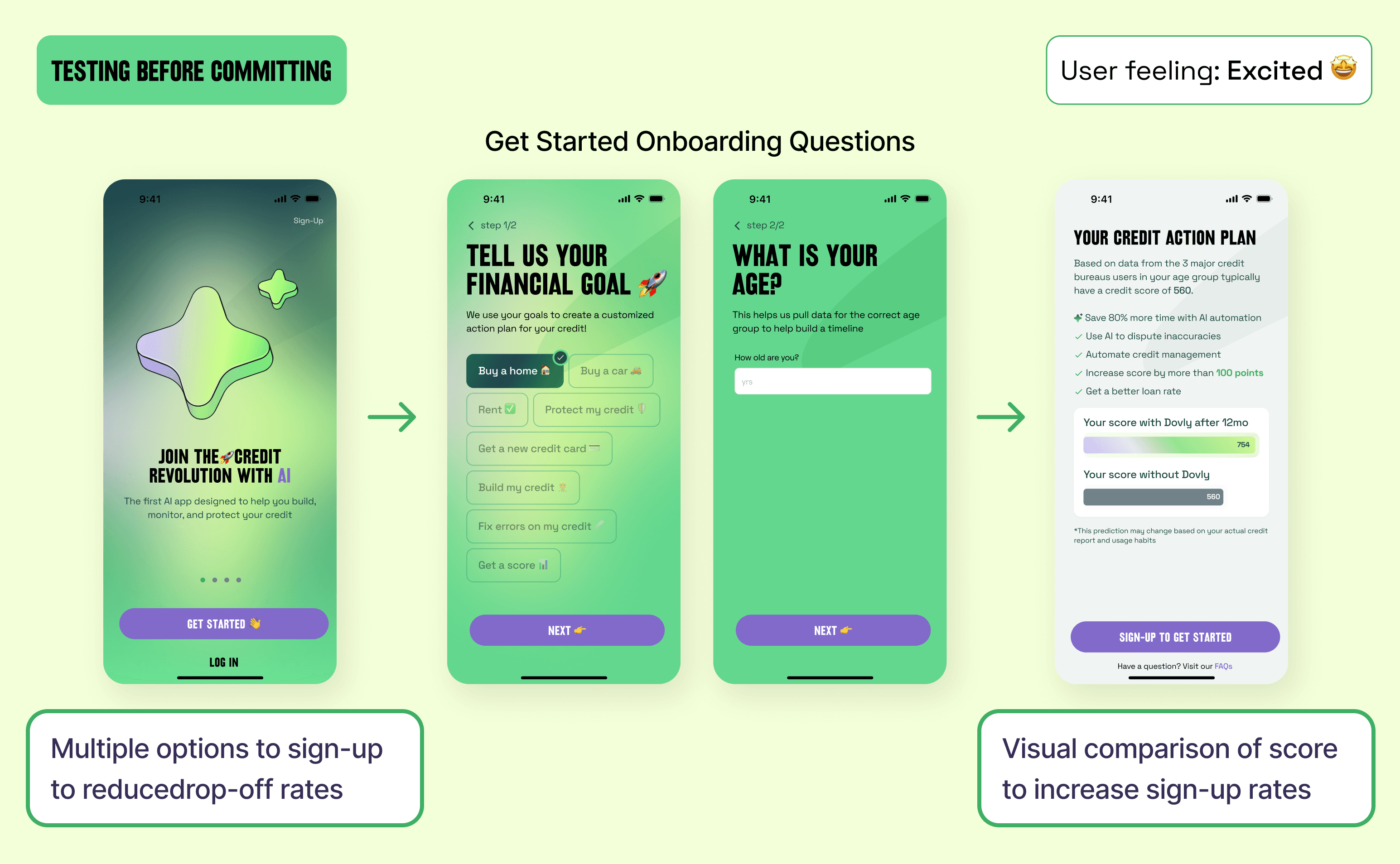
For many users, viewing their credit score can be an emotional moment—especially when it’s lower than expected. We reimagined this step to replace fear with encouragement. The new design celebrates possibility, using visual storytelling to show steady progress and achievable milestones.
By shifting the focus from how far they have to go to how much they can grow, the experience now feels hopeful, personal, and action-driven.

A Dashboard that Drives Engagement
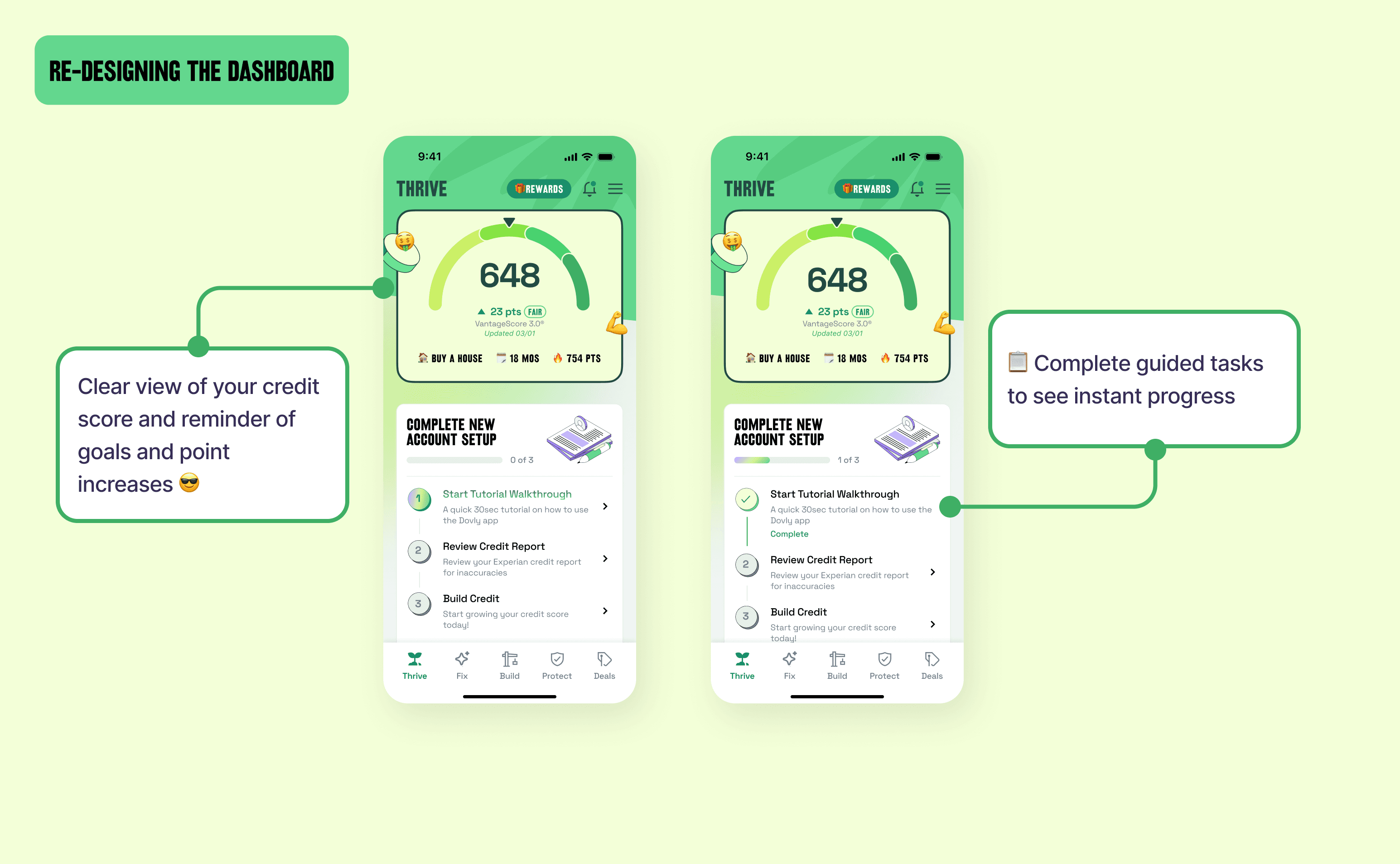
We restructured the dashboard to serve as both a motivator and a navigator. Users now see their score, goals, and improvement metrics in one glance—alongside task-based prompts that reinforce daily engagement.
This streamlined experience aligns behavioral cues with business goals, increasing retention and encouraging consistent progress toward better credit health.
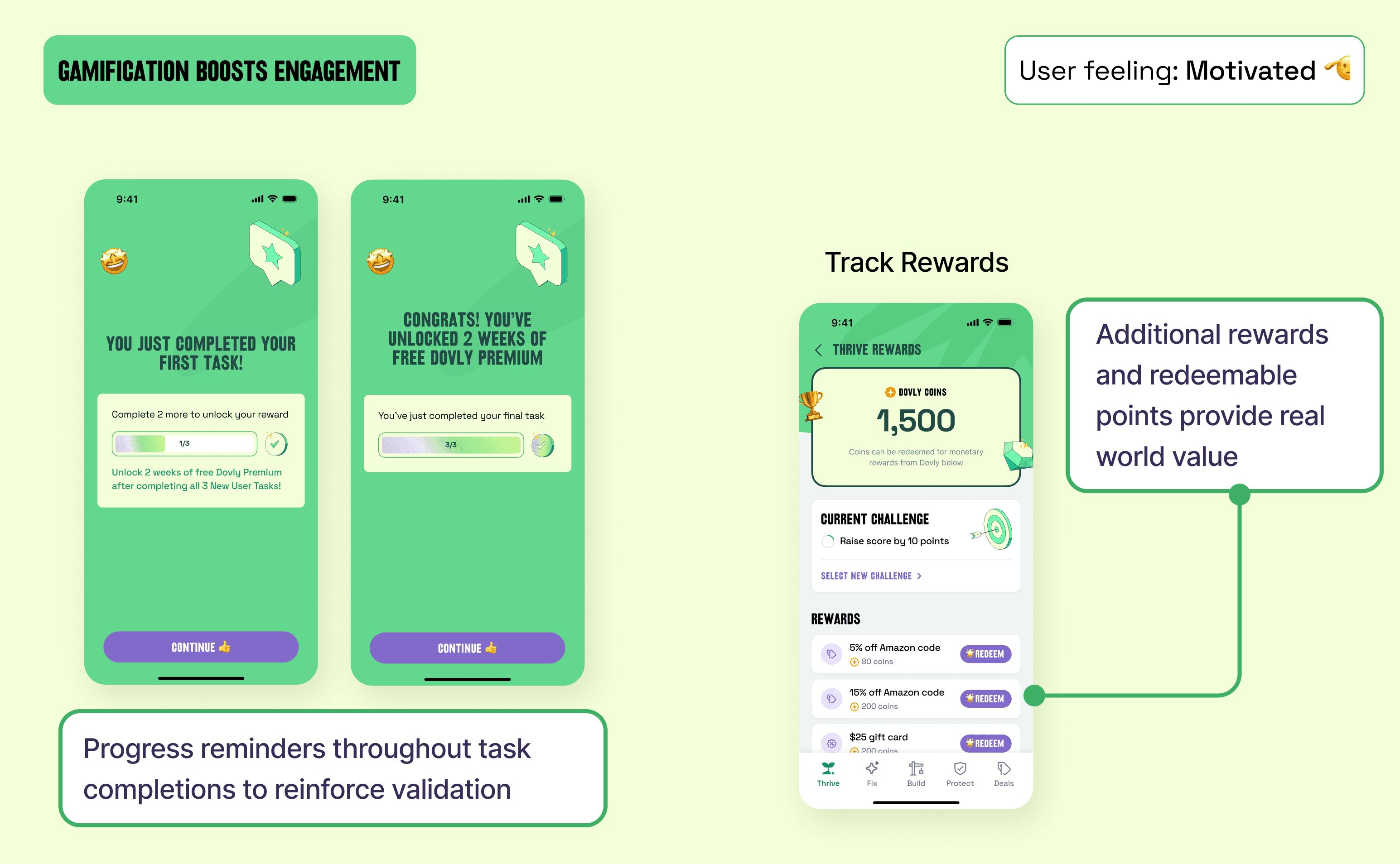
Keeping Momentum through Gamification
User data showed that early drop-offs often occurred after initial setup. To address this, we introduced a rewards system that connects real-world value with consistent engagement. Progress tracking, point accumulation, and milestone celebrations create a sense of achievement that keeps users coming back.
This system reframes credit improvement as an attainable, rewarding experience—one that feels active, not passive.
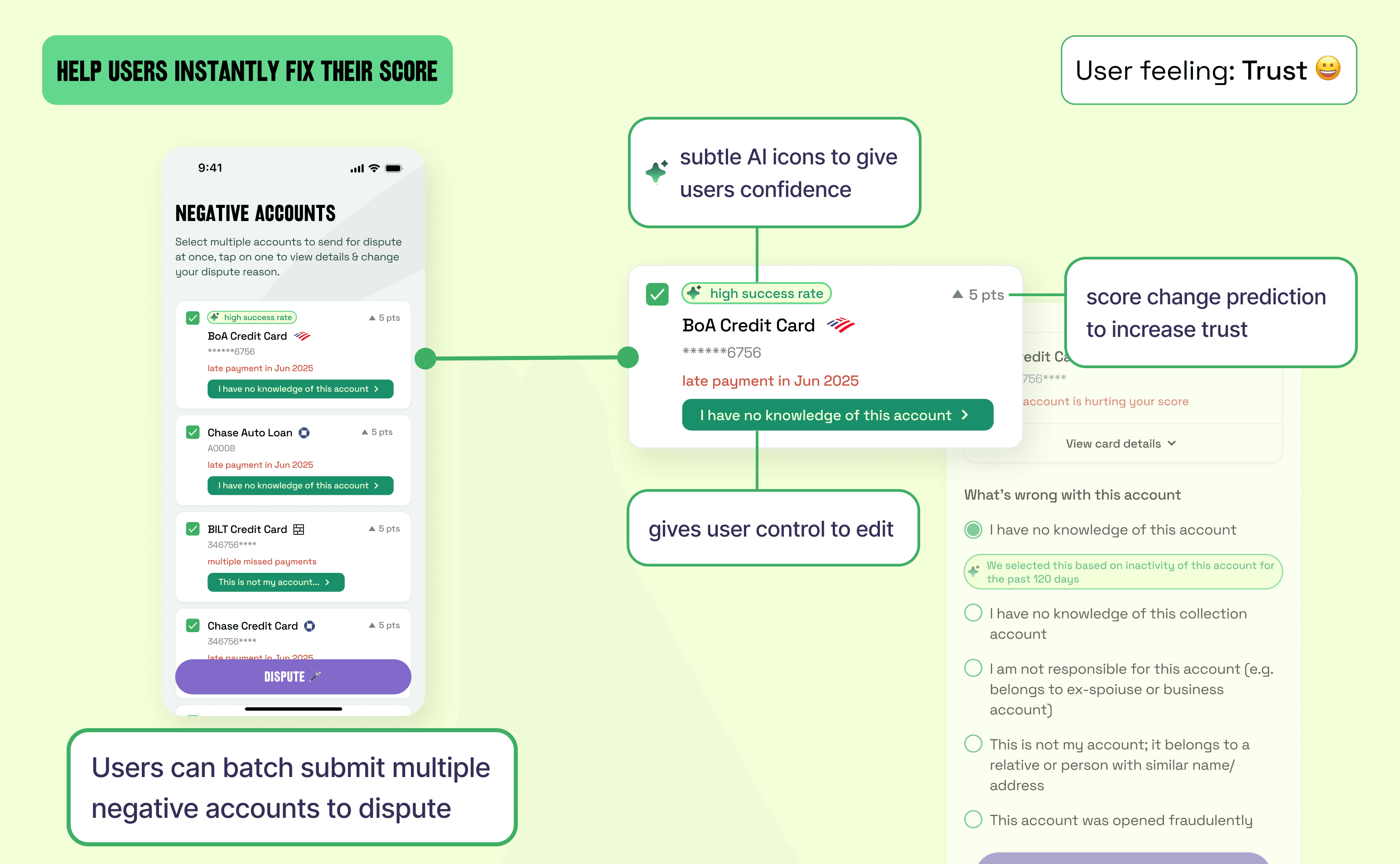
Giving Control through Transparency
One of the biggest challenges users faced was understanding how to take action on negative accounts. The redesigned dispute flow gives users instant control—allowing them to batch-select multiple items, edit dispute reasons, and view projected score improvements.
We incorporated subtle AI cues and clear success indicators to build trust, showing users that their actions have measurable impact. This approach turned what was once a confusing process into a transparent, empowering experience.
Validating Through User Testing
Using the interactive prototype, we conducted small-scale user testing sessions with both new and existing Dovly users. Participants were asked to complete key flows, such as onboarding, reviewing their action plan, and disputing a negative account.
The feedback confirmed that the redesigned experience felt clearer, faster, and more trustworthy. Users especially appreciated the guided onboarding, simplified credit overview, and transparent progress indicators, which made them feel more in control of their financial journey.
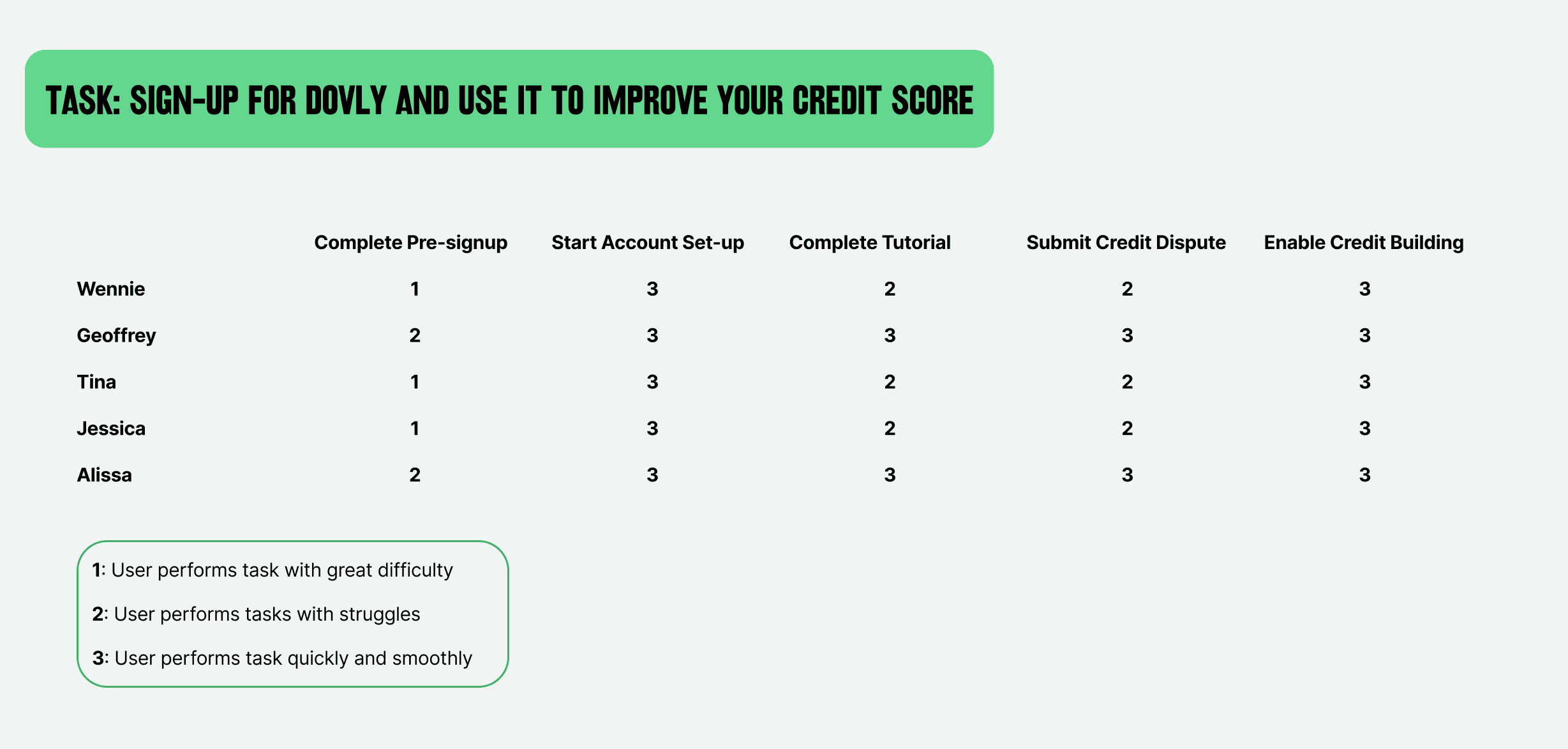
User testing with five participants revealed consistent improvements in navigation and task completion:
80% of users completed all major flows without external help
100% of users completed disputes and credit-building tasks smoothly (rating 3/3)
Early friction points centered around pre-signup clarity, offering a clear area for further refinement
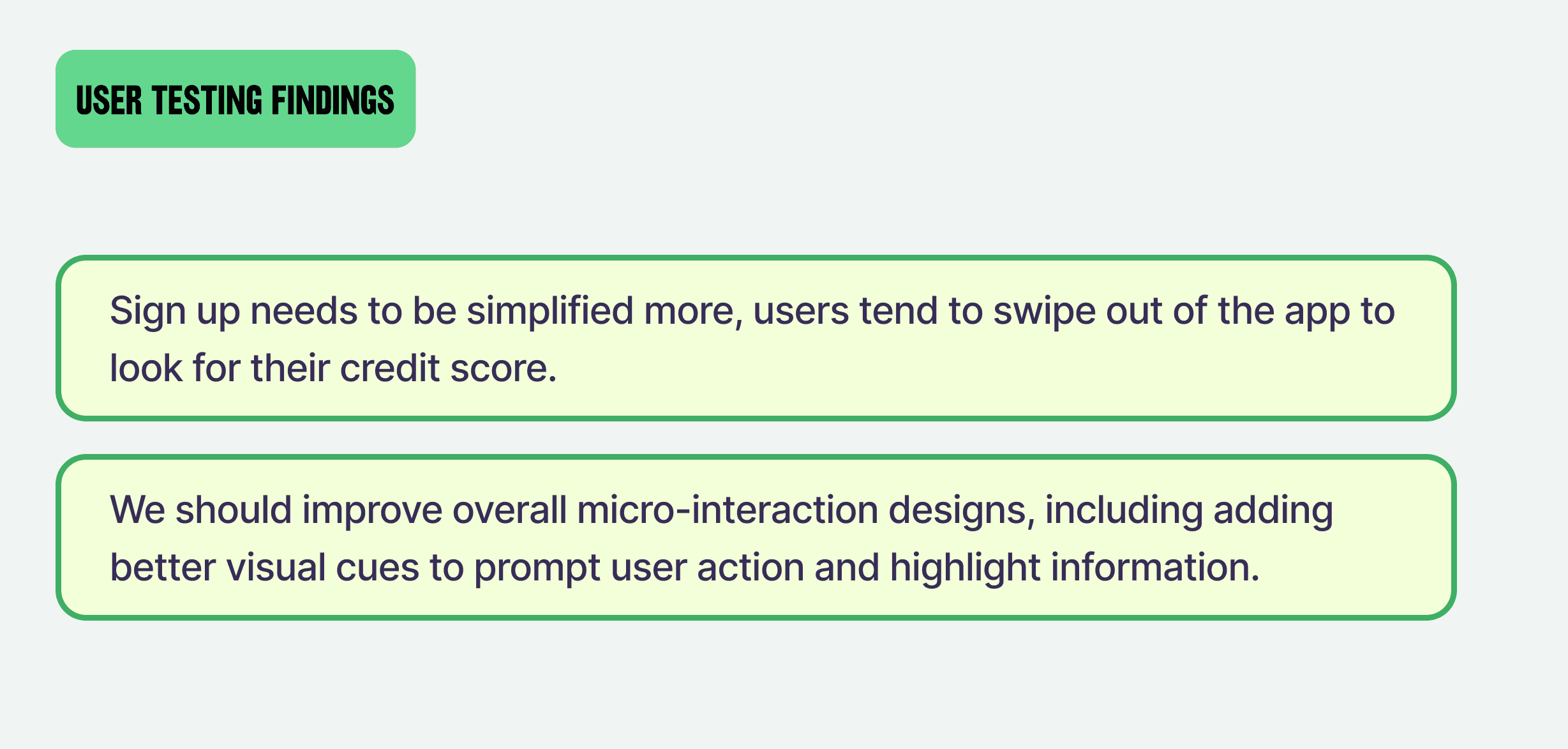
Overall, these findings validated the redesign’s success in reducing cognitive load and improving user confidence across critical actions.
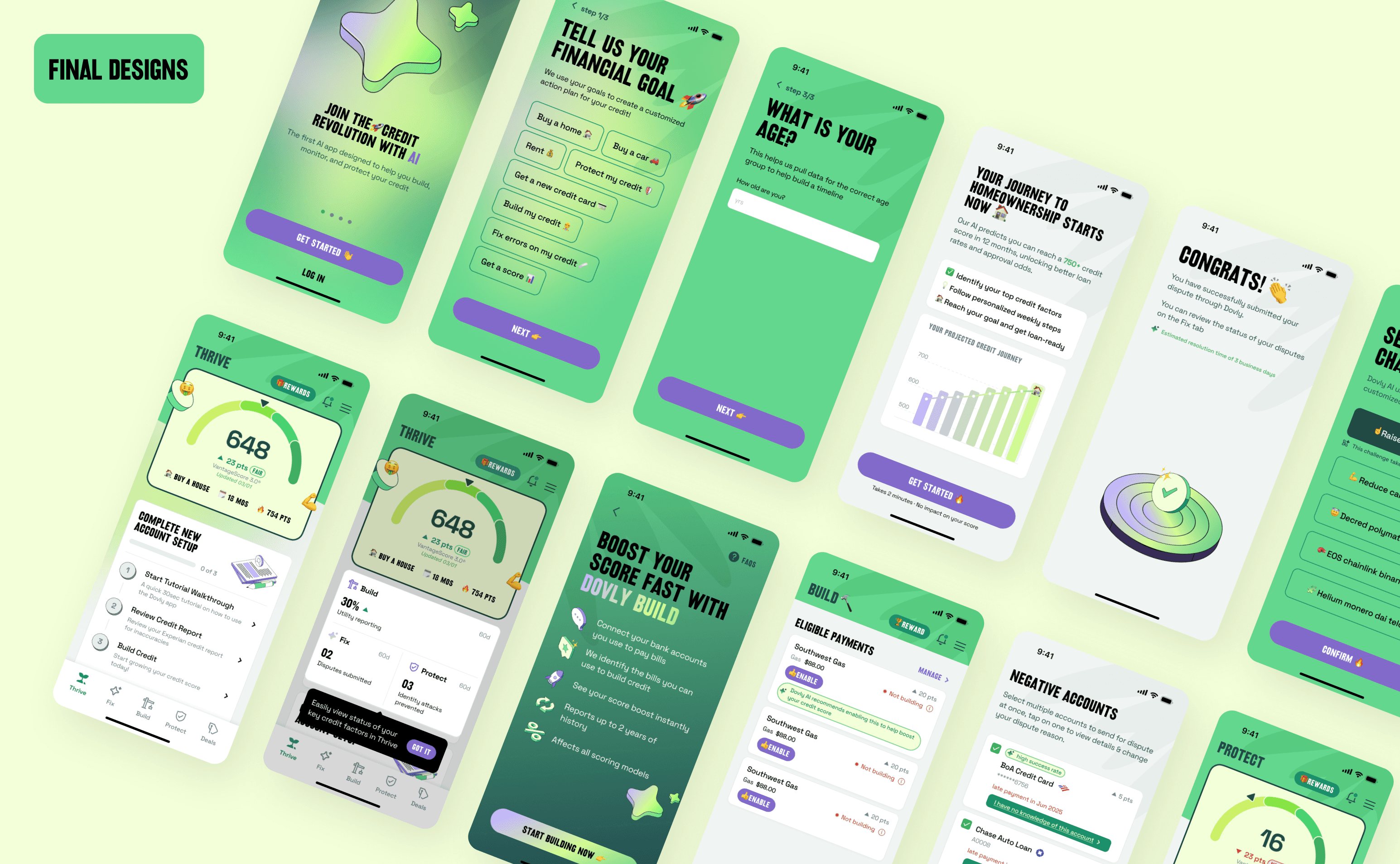
Prototype
See how the redesigned experience comes to life—from first impression to credit improvement. This prototype helped the team validate flows, refine microinteractions, and ensure the experience delivers clarity and confidence at every step.
Click to test the Figma prototype
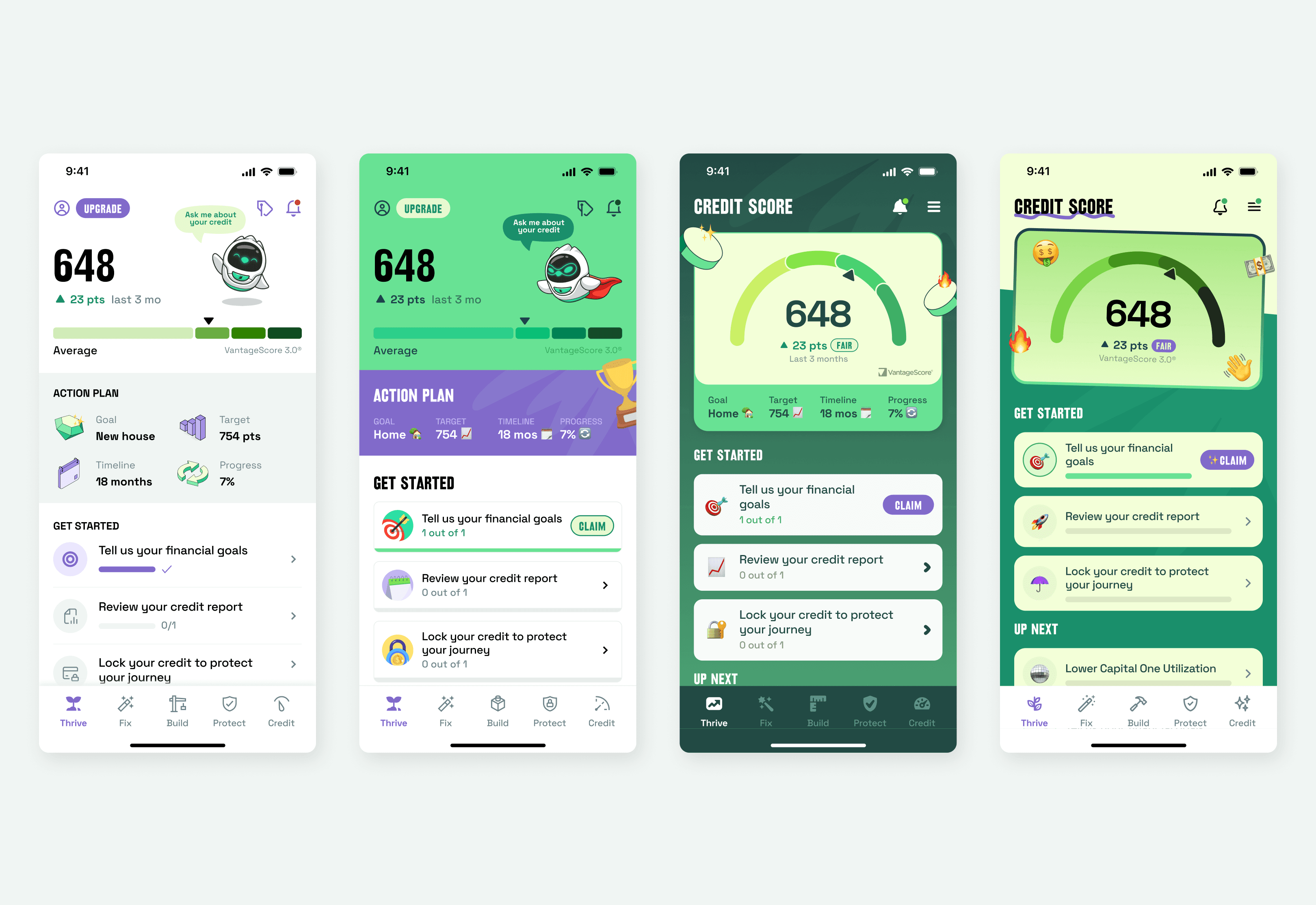
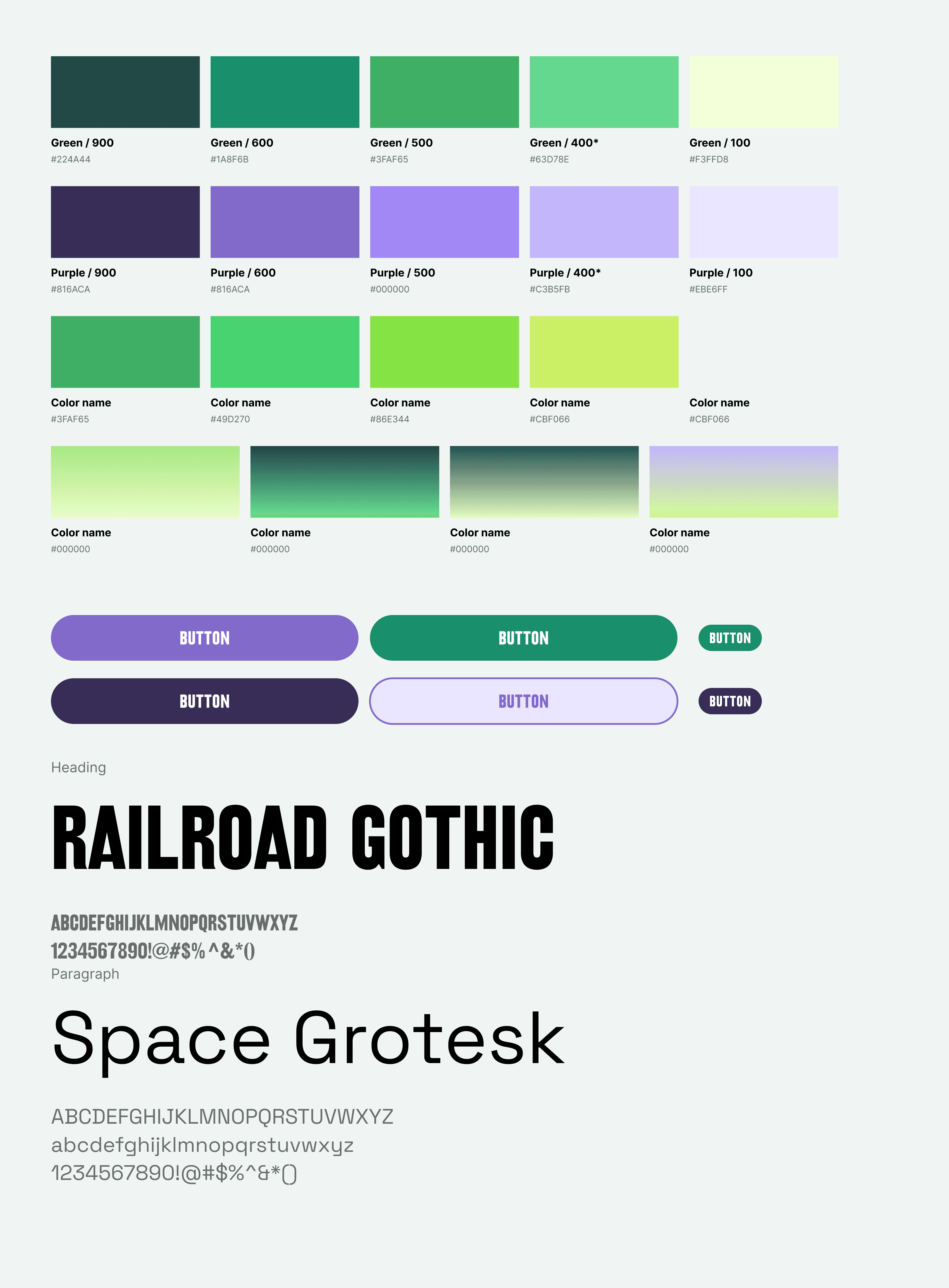
Style explorations
Results and impacts